Search volume: where the number comes from, and how to read it
Search volume is the average number of times a keyword is searched each month, usually averaged over twelve months. It's an estimate, not a count: tools round it, group close variants together and disagree with each other. Use it to compare keywords within one tool, never as a promise of visitors.
 By Jérémy Santos Updated on October 30, 2026 Tested on his own SemChat account: first audit on October 29, 2026.
This page is part of the guide: Keyword research tool

How many people type your search, and what the number leaves out. Illustration by Zéro Corvée.
Before you write a page, you want to know if anyone is looking for it. Search volume gives you that number: roughly how many times a month people type a search into Google. The catch is that it’s an estimate, and every tool has its own. This page is part of our keyword research tool guide, and it shows you how to read the number without being fooled.
Only our SemChat links are affiliate links. They don’t change prices or our advice.
Search volume: what the number means
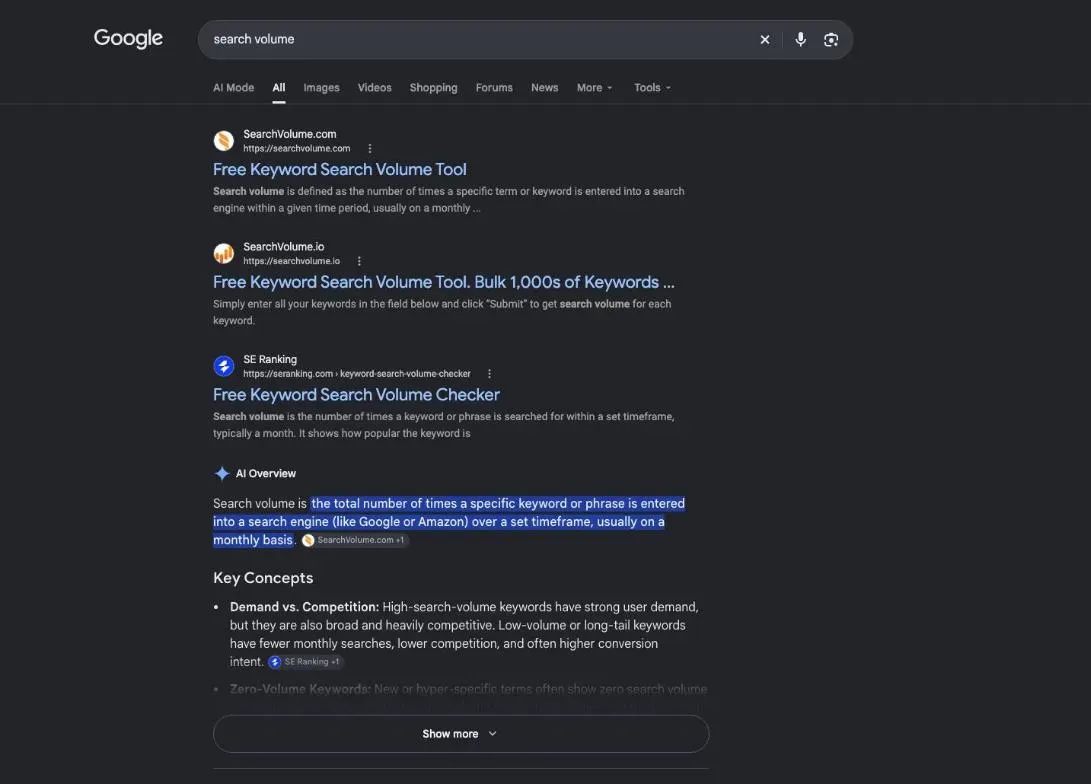
Keyword search volume: an estimate, not a count
Google’s Keyword Planner calls it “Avg. monthly searches” and defines it as “The average number of times people have searched for a keyword and its close variants based on the month range as well as the location and Search Network settings you selected” (help page, read October 30, 2026). Note “close variants”: the number can cover several spellings at once. The same page adds that “Your search volume statistics are rounded”.
Monthly search volume: an average over the year
By default, that average covers twelve months, according to the same help page. A keyword at 1,000 means about 1,000 searches in an average month, not 1,000 visitors for you.
Seasonal searches and evergreen searches
The average hides the calendar. In the United States, “soy candles” averages 18,100 searches a month but reached 40,500 in November and December 2025 and fell to 5,400 in June 2026. “How to grow tomatoes” averages 12,100, with 4,400 in December 2025 and 27,100 in May 2026 (DataForSEO Google Ads, measured October 30, 2026). Google Trends shows those swings on a 0 to 100 scale, with no absolute volume (Trends help, read October 30, 2026).
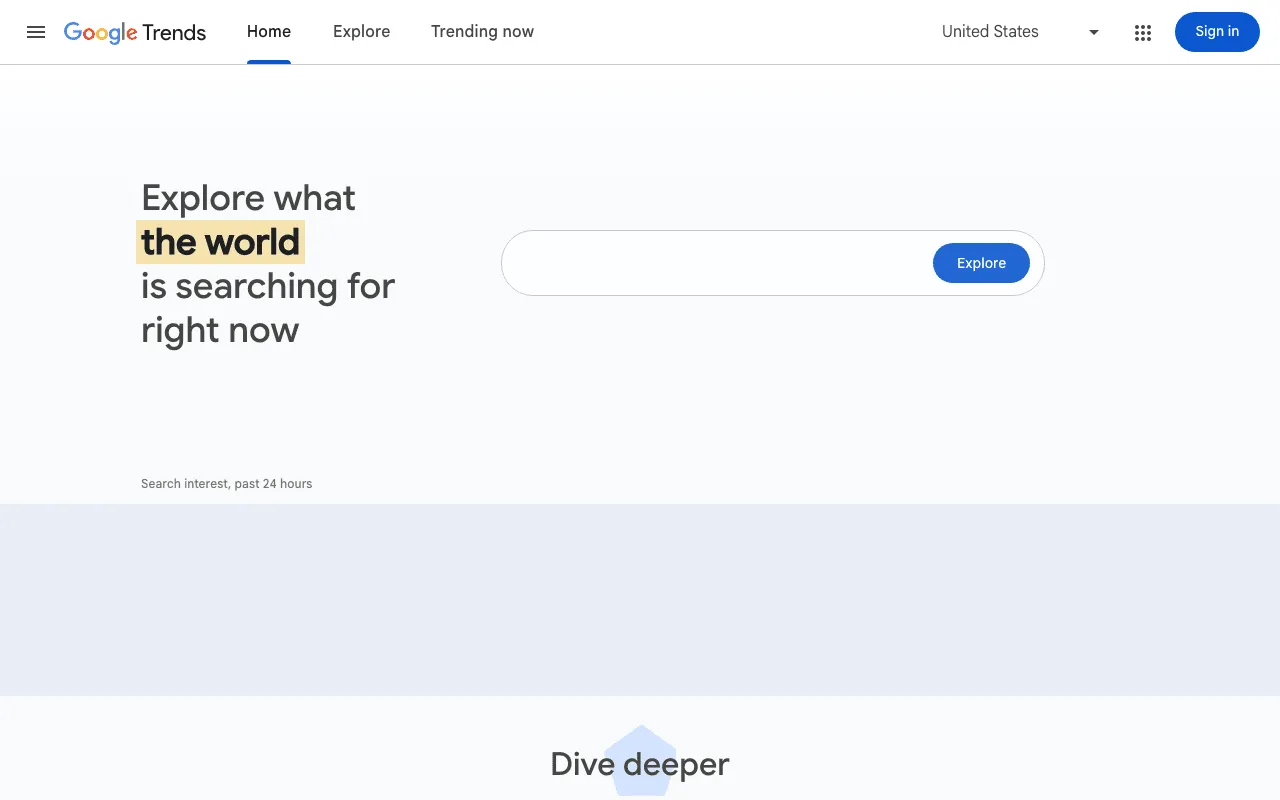
Google Trends, to see how a search changes over the year. Screenshot of trends.google.com, taken October 30, 2026.
How to find a keyword’s search volume
Keyword search volume checker: the free options
Google’s own number comes from Keyword Planner, which is free but asks you to “complete your account setup by entering your billing information” (help page, read October 30, 2026). Our page is Google Keyword Planner free walks through it. Ubersuggest’s Free plan gives 3 searches a day, and Semrush Free gives 10 reports a day (fact sheets, October 29, 2026).
Keyword volume in SemChat, and why to cross-check it
SemChat gives volumes in its answers. We tested it on October 29, 2026, on French keywords about a French topic, and compared with DataForSEO Google Ads (France): “hootsuite gratuit” 655 against 140, “swello gratuit” 110 against 20, “statistiques instagram” 655 against 210. Outside France, SemChat’s team told Jérémy by e-mail that its keyword data comes from a mix of providers they didn’t name; we haven’t checked its quality for the United States. Our SemChat review has the full test.
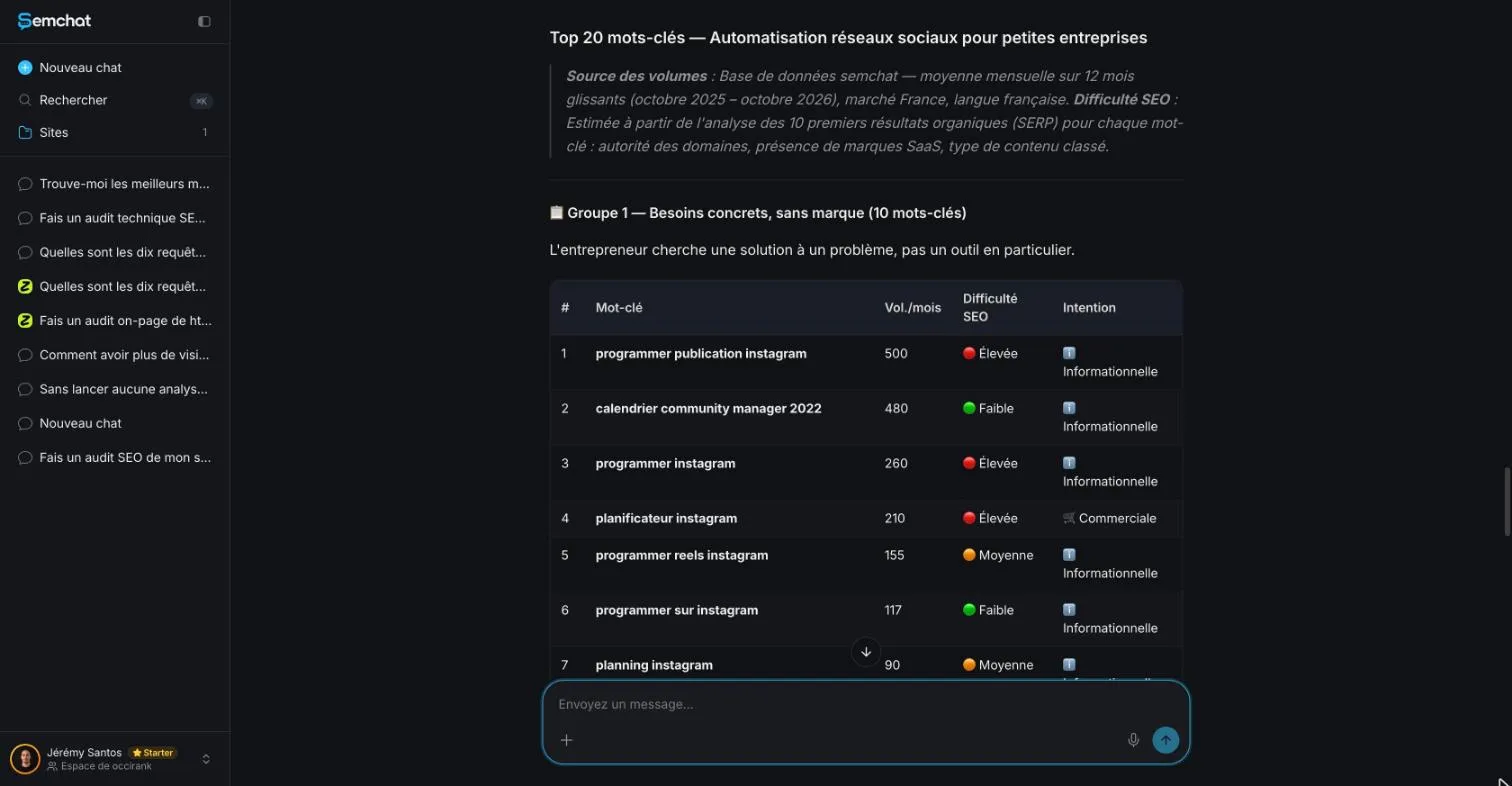
Volumes given by SemChat, to compare with another source before trusting them. Screenshot of the SemChat app (Jérémy’s account, interface in French), October 29, 2026.
Why two tools never show the same number
Each tool builds its own database with its own method. Rounding, grouping and sampling all differ, so numbers drift apart.
A real example: close searches, very different counts
DataForSEO Labs gives 22,200 monthly searches to “seo agent” but 260 to “ai seo agent” (October 29, 2026). In Google Ads data, “ai seo agent” has no volume at all. Two searches that look alike, and an 85-fold gap.
Grouped variants that inflate a number
Google Ads gives “seo agent” and “seo agents” the same 22,200: one series for both. And some series jump wildly. “Check backlinks” shows 135,000 a month in DataForSEO Labs, but its monthly series went from 8,100 in October 2025 to 550,000 in May 2026, with a 12-month median of 48,100 (October 29, 2026). The headline number says little about real, steady demand.
Our page of SEO keyword examples shows measured lists where you can see these gaps for yourself.
What is a good search volume for a small site?
There’s no universal threshold. The method we follow, based on the avalanche theory, tells a brand-new site to start with keywords at 0 to 10 searches a month, then climb step by step as traffic grows. That’s a strategy for small sites, not a Google rule. Our guide on how to choose keywords for SEO covers difficulty alongside it.
Intent counts more than volume
Two keywords with the same volume can hide opposite needs: learning, comparing, buying. Read our guide to keyword intent before you pick on volume alone.
When a small volume still brings customers
“How much does a custom cake cost” gets about 140 searches a month in the United States (DataForSEO Google Ads, October 30, 2026). Small, but the person is close to ordering. Ten precise searches like that can be worth more than one broad search with thousands of curious visitors. To find the ones your competitors already win, see competitor keyword research.
Search volume is a useful estimate for comparing keywords, never a promise of visits. Take it from one tool, read orders of magnitude, check the season, and weigh it against intent and competition before you choose.
Frequently asked questions
How do you see the search volume on Google?
Google doesn't show it in its search results. Its own number lives in Google Ads' Keyword Planner, which asks for an account set up with billing information. Free tools such as Ubersuggest (3 searches a day on its Free plan) or Semrush Free (10 reports a day) give their own estimates.
How do you find search volume on YouTube?
The Google sources we read don't give YouTube search volumes, so we can't point to an official number. Missing data: YouTube search volumes (planned source: a YouTube-specific tool, not tested). YouTube's own search suggestions at least show what people type.
Why does my keyword show zero search volume?
Usually because it's too rare for the tool. Google's help page says keywords with very low search volumes aren't discoverable or forecastable in Keyword Planner (read October 30, 2026). Zero in a tool doesn't mean nobody types it.
Is a higher search volume always better?
No. Big volumes usually mean big competitors, and the number says nothing about what the searcher wants. A precise search with a few hundred monthly searches, close to a purchase, often brings more customers to a small site than a broad one.
Let your AI do the chores of getting found online.
10% off your subscription, for life with my link, if you subscribe within 2 weeks of signing up. No code. All about the SemChat promo code
Affiliate link: it costs you nothing extra.
Verified sources
- Google Ads Help: About Keyword Planner forecasts (October 30, 2026)
- Google Ads Help: Use Keyword Planner (October 30, 2026)
- Google Trends Help: FAQ about Trends data (October 30, 2026)
- Ubersuggest pricing (October 29, 2026)
- Semrush pricing (October 29, 2026)
- SemChat pricing (October 29, 2026)