Backlinks: what they are, why they count, how to earn them
Backlinks are links from other websites to yours. Google uses them to discover your pages and to work out which ones are useful, but it lists buying links for ranking as link spam. Here's how to earn clean backlinks, with a real new site as the example.
 By Jérémy Santos Updated on 30 October 2026 Tested on his own SemChat account: first audit on 29 October 2026.
This page is part of the guide: website optimisation

Links from other sites, earned rather than bought. Illustration by Zéro Corvée.
Your site is live, your pages are good, and still no other website mentions you. Backlinks are what change that: links from other sites that point to yours. Earning them is the “off your site” half of website optimisation, next to everything you tune on your own pages. This guide relies on Google’s own pages, read 30 October 2026, and on a real case: plugkit-avis.com, my own site, which had a single backlink on 29 October 2026. The SemChat button on this page is an affiliate link.
What are backlinks? Links from other sites to yours
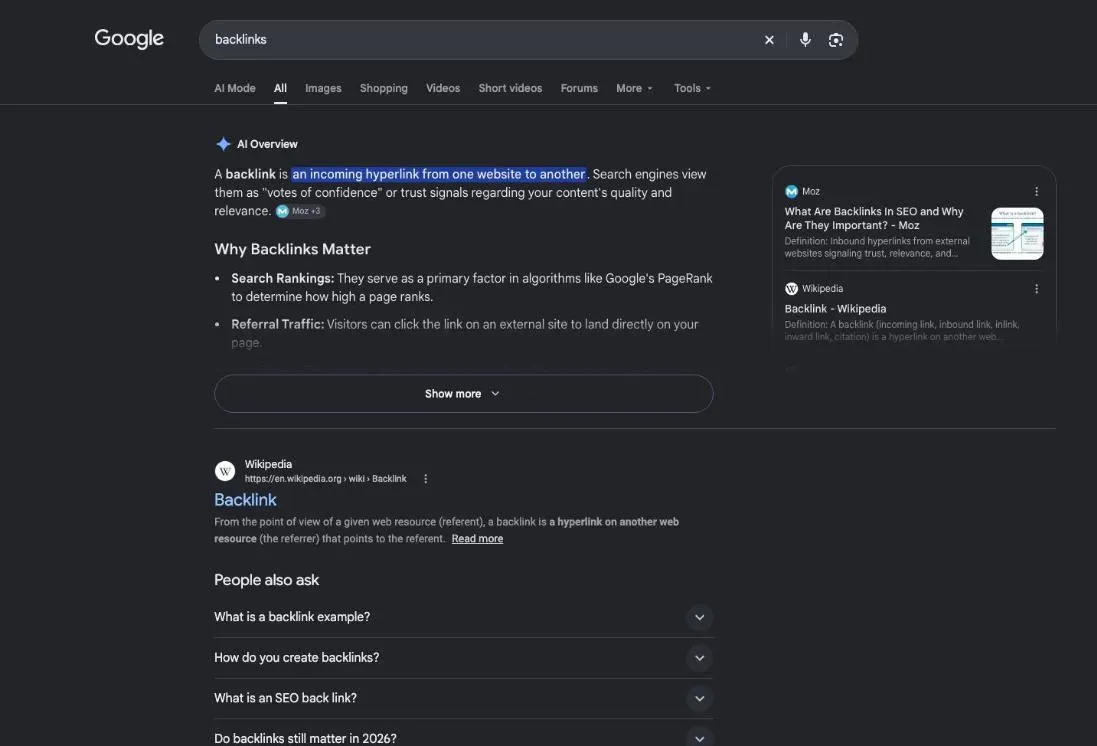
Backlinks are links placed on someone else’s website that send readers to yours. Google uses the same word in its Search Console help. They’re also called inbound links or incoming links.
What is a backlink, in one sentence
Google’s definition, from the Search Console help: “A backlink is a link on a page from another site that links to a page on your site.”
An example. A food blogger posts a jam recipe and writes “I get my jars from Lea’s Jar Shop,” with a link to Lea’s online store. For Lea, that’s a backlink.
Backlink, internal link, external link: the difference
Three words for three directions:
- a backlink comes from another site to yours;
- an internal link goes from one of your pages to another of your pages;
- an external link (or outbound link) goes from your page to someone else’s site.
Lea’s backlink is, for the food blogger, an external link. Links between your own pages are a separate job, covered in our guide to internal linking SEO.
Referring domain: the word you will see in every tool
Every backlink tool shows two numbers: backlinks, and referring domains, meaning the sites those links come from. If the food blogger links to Lea from three different posts, Lea has three backlinks but only one referring domain.
Google does the same grouping. The Search Console help says “data is actually grouped by root domain in the Links report.” So read it this way: referring domains tell you how many different sites cite you; backlinks tell you how many times.
- One referring domain the food blog
- Link from the recipe post
- Link from the tips page
- Link from the about page
Why backlinks matter in SEO
Backlinks in SEO: a vote of confidence, not a guarantee
Google’s guide to its ranking systems puts it plainly: “We have various systems that understand how pages link to each other as a way to determine what pages are about and which might be most helpful in response to a query.” One of them is PageRank, used since Google launched. Google adds that “it continues to be part of our core ranking systems.”
The same Google keeps things in proportion in its SEO Starter Guide: “While PageRank uses links and is one of the fundamental algorithms at Google, there’s much more to Google Search than just links. We have many ranking signals, and PageRank is just one of those.”
So a backlink helps a useful page. It doesn’t rescue a thin one. And Google says nothing about how much a single link weighs: anyone who gives you a number is guessing.
Visitors who arrive through the link
A backlink is first a door. The reader of the food blog who clicks “Lea’s Jar Shop” lands in Lea’s store, ready to buy jars. That traffic would exist even if search engines didn’t count links at all.
That’s also why a link from a site with real readers in your field beats a link from a page nobody visits.
Google finds your new pages sooner
Links are how Google discovers pages. The Starter Guide: “Google primarily finds pages through links from other pages it already crawled. In many cases, these are other websites that are linking to your pages.” It goes further: “the vast majority of the new pages Google finds every day are through links.”
Google’s in-depth guide to how Search works gives an example: a hub page, such as a category page, links to a new blog post, and that’s how Google finds the post. A link from another site works the same way for your new page.
What about AI search?
Google gives no separate recipe for its AI features. Its page on AI features and your website is clear: “There are no additional requirements to appear in AI Overviews or AI Mode, nor other special optimisations necessary.” The usual SEO best practices still apply.
For ChatGPT or Perplexity, I haven’t read any official page that measures what links do. So I won’t promise you anything there.
Types of backlinks: followed, nofollow, editorial
Followed and nofollow links
By default, a link is a plain link that Google can follow and use. Google’s documentation on qualifying outbound links says that for “regular links that you expect Google to fetch and parse without any qualifications, you don’t need to add a rel attribute.”
Site owners can label some links with a rel attribute. Three values matter:
- sponsored: “Mark links that are advertisements or paid placements (commonly called paid links) with the sponsored value.”
- ugc: “We recommend marking user-generated content (UGC) links, such as comments and forum posts, with the ugc value.”
- nofollow: “Use the nofollow value when other values don’t apply, and you’d rather Google not associate your site with, or crawl the linked page from, your site.”
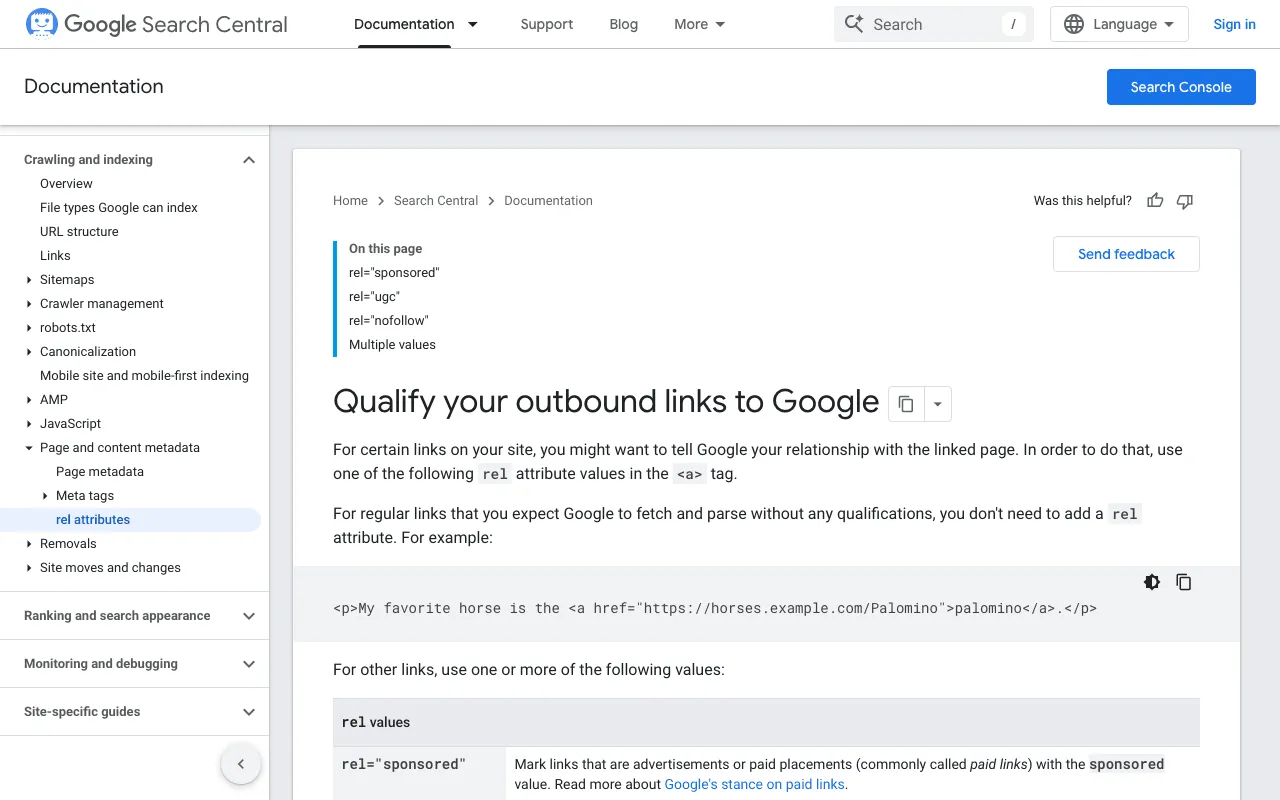
Google adds that links with these attributes “will generally not be followed.” A nofollow link from a busy forum can still send you readers, though.
Editorial links, guest posts, forum and comment links
Not all backlinks are born the same way:
- Editorial links: someone cites you because your page helped them. Nobody asked, nobody paid. These are the ones to aim for.
- Guest posts: you write an article for another site, which credits you with a link. Fine when the article serves its readers; Google lists guest posts with “optimised anchor text” among its link spam examples.
- Forum and comment links: you answer a question and link to your page. Google recommends that sites mark these with ugc, and it lists “Forum comments with optimised links in the post or signature” as link spam.
What makes a good backlink
A site about the same topic, with its own audience
A link from a food blog to a jar shop makes sense to the reader. It also helps Google, which uses links to work out “what pages are about.” A link from an online betting site to a bakery tells nobody anything about the bakery.
Look for sites with real readers: comments, shares, a newsletter, a team behind them. Each tool also estimates authority with its own score, such as Ahrefs’ Domain Rating. Every tool computes its own: never compare one tool’s score with another’s.
A link placed in the text, where readers click
A link inside a sentence, in an article people actually read, is the kind readers click. A link buried in a footer repeated on every page of a site is another story: Google lists “Widely distributed links in the footers or templates of various sites” as link spam.
Anchor text that reads naturally
The anchor text is the clickable words of a link. Google’s Starter Guide says “This text tells users and Google something about the page you’re linking to.”
Natural backlinks mostly use your brand name, your web address, or a plain description: “Lea’s Jar Shop,” “leasjarshop.com,” “this jar shop.” A stream of links that all say “cheap glass jars free shipping” looks bought, because that’s what bought links often look like. You rarely control the anchor text of a link someone else writes, and that’s fine.
Backlink examples: good, so-so, bad
| Good | So-so | Bad | |
|---|---|---|---|
| Where | a food blog's recipe post | a local business directory | a page listing thousands of sites |
| How you got it | the blogger liked your jars | you filled in a form | you paid for it |
| What it brings | readers who want jars | a little visibility | a link spam risk |
The good link has all three: the same topic, real readers, and nobody paid. The so-so link is harmless if the directory is one your customers really use; Google lists “Low-quality directory or bookmark site links” as link spam. The bad link is the one Google’s rules name first.
How to earn backlinks without tricks
Google’s Starter Guide says other sites linking to you “happens naturally over time,” and that you can help by promoting your site. Here’s how, without paying for a single link.
Publish pages worth citing: guides, answers, free tools
The strongest backlinks come from pages other people want to point to: a complete guide, a price comparison table, a small free calculator, a survey with your own numbers. Google notes that links “can also add value by connecting users (and Google) to another resource that corroborates what you’re writing about.” Be that resource.
Our method for writing those pages is in SEO content writing. If a freelancer writes them, hand over a clear content brief.
Write for other sites in your field
Offer an article to a blog your customers read: a supplier, a partner, a peer who isn’t a direct competitor. Write it for their readers first. Two traps, both named by Google: getting paid or paying, and stuffing the article with keyword-rich anchor text. A credit with your name or your address is enough.
Local listings, partners and customer reviews
- Partners and suppliers: many have a “where to buy” or “our partners” page. Ask to be on it.
- Directories your customers use: your trade association, your chamber of commerce, the main listing sites in your field.
- Customers who blog or post about you: thank them, and ask if they’d like to link to the product they mention.
Google also lists “Excessive link exchanges” as link spam. Two real partners linking to each other is normal; a page full of swapped links isn’t.
Mentions without a link, and broken links to replace
Sometimes a site names your business without linking to it. A short, friendly email (“thanks for the mention, here’s the page if your readers want it”) often turns a mention into a link.
Broken links work the same way. If a page in your field links to a resource that no longer exists, and you have a page on the same topic, tell the owner. You fix their page and gain a link in one email.
Podcasts, interviews and press
Shows and journalists need guests and stories. A podcast episode page or an interview usually credits the guest’s website. Pitch a topic you know well, not your product. Google’s Starter Guide counts “Word of mouth” among the most lasting ways to promote a site, and also suggests putting your web address on business cards, letterhead and posters.
Links to avoid: bought links and toxic links
Buying links: what Google’s rules say
Google’s spam policies define the problem: “Link spam is the practice of creating links to or from a site primarily for the purpose of manipulating search rankings.” The first example is “Buying or selling links for ranking purposes,” which includes “Exchanging money for links, or posts that contain links” and “Exchanging goods or services for links.”
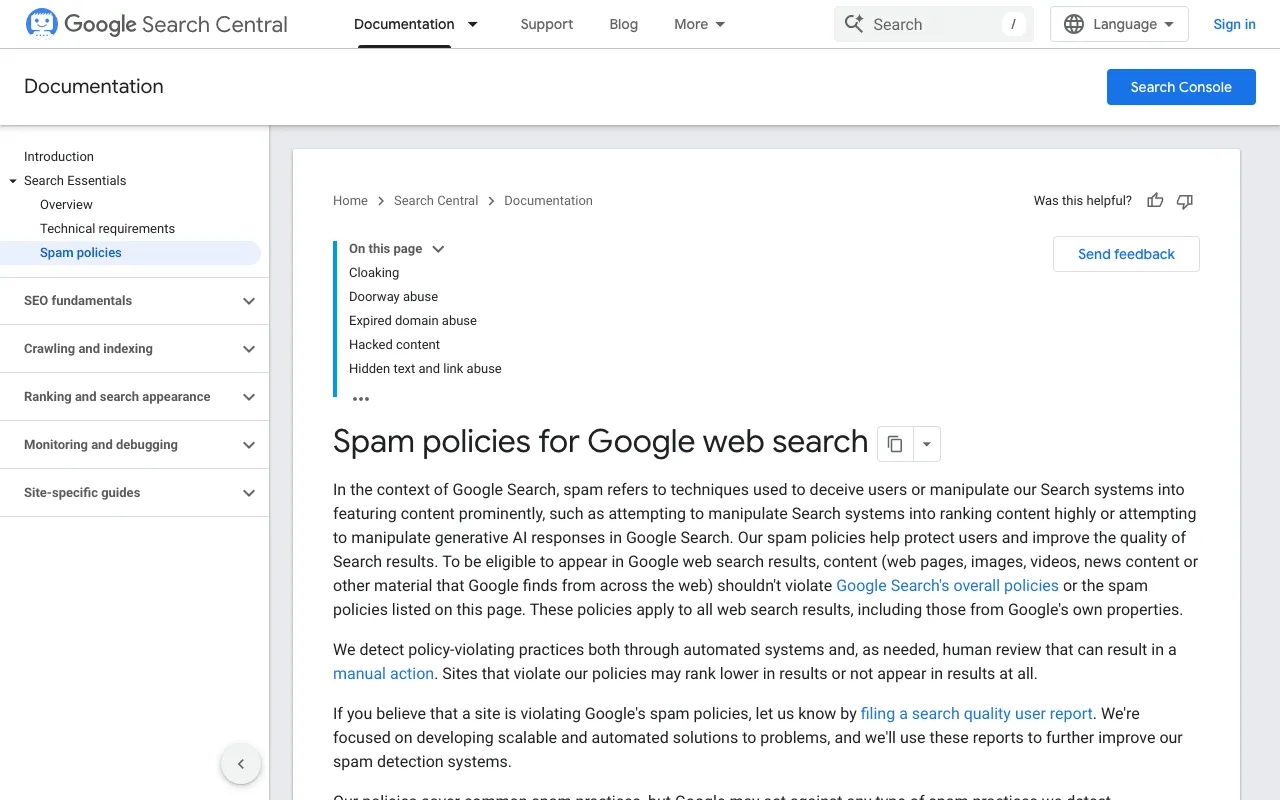
Paying for visibility isn’t banned as such. Google writes that buying and selling links “is a normal part of the economy of the web for advertising and sponsorship purposes,” as long as those links are “qualified with a rel=“nofollow” or rel=“sponsored” attribute value.” If you pay a blog to feature your store, ask for the sponsored label. You’ll get readers, not rankings.
Free backlink generators and link lists
You’ll find services that promise hundreds of backlinks in a click. Google’s rules list “Using automated programs or services to create links to your site” as link spam. I won’t name any of these services, and I don’t recommend any.
Spammy links: when the disavow tool makes sense
Found odd links pointing to you? Don’t panic. Google’s help says: “In most cases, Google can assess which links to trust without additional guidance, so most sites will not need to use this tool.” It also warns: “This is an advanced feature and should only be used with caution.”
Google sets two conditions, both needed: a considerable number of spammy, artificial or low-quality links, and a manual action caused or likely. How to sort your links one by one is the subject of our link audit guide.
See who links to you, and to your competitors
The links report in Google Search Console
The Links report in Google Search Console is free for your own site. Google describes it: “Select a URL in the list to see the top sites linking to that page. Sites are shown by their root domain, with any subdomain omitted.”
Two limits sit on the same page: “This report isn’t a comprehensive list of every link on your site,” and “The report doesn’t specify if a link is marked as nofollow.” For a fuller view, and a side-by-side look at the free tools, see how to check backlinks.
Your competitors’ links, as a list of ideas
The sites that link to your competitors are your best list of prospects: if a food blog cites another jar shop, it might cite yours. Free options are limited. Semrush’s Free plan allows 10 reports a day, and Ahrefs’ FAQ says its free account doesn’t let you study competitors’ sites (Semrush and Ahrefs fact sheets, 29 October 2026).
You can also ask SemChat in one sentence who links to a competitor. I haven’t tested that request yet, so I can’t tell you what it returns.
A new site with no links: the real case of plugkit-avis.com
One referring domain, found by the SemChat audit
SemChat is a conversational SEO assistant. On 29 October 2026, its full audit of plugkit-avis.com counted “1 domaine référent” (one referring domain) among its key numbers. The diagnosis said it in plain words.
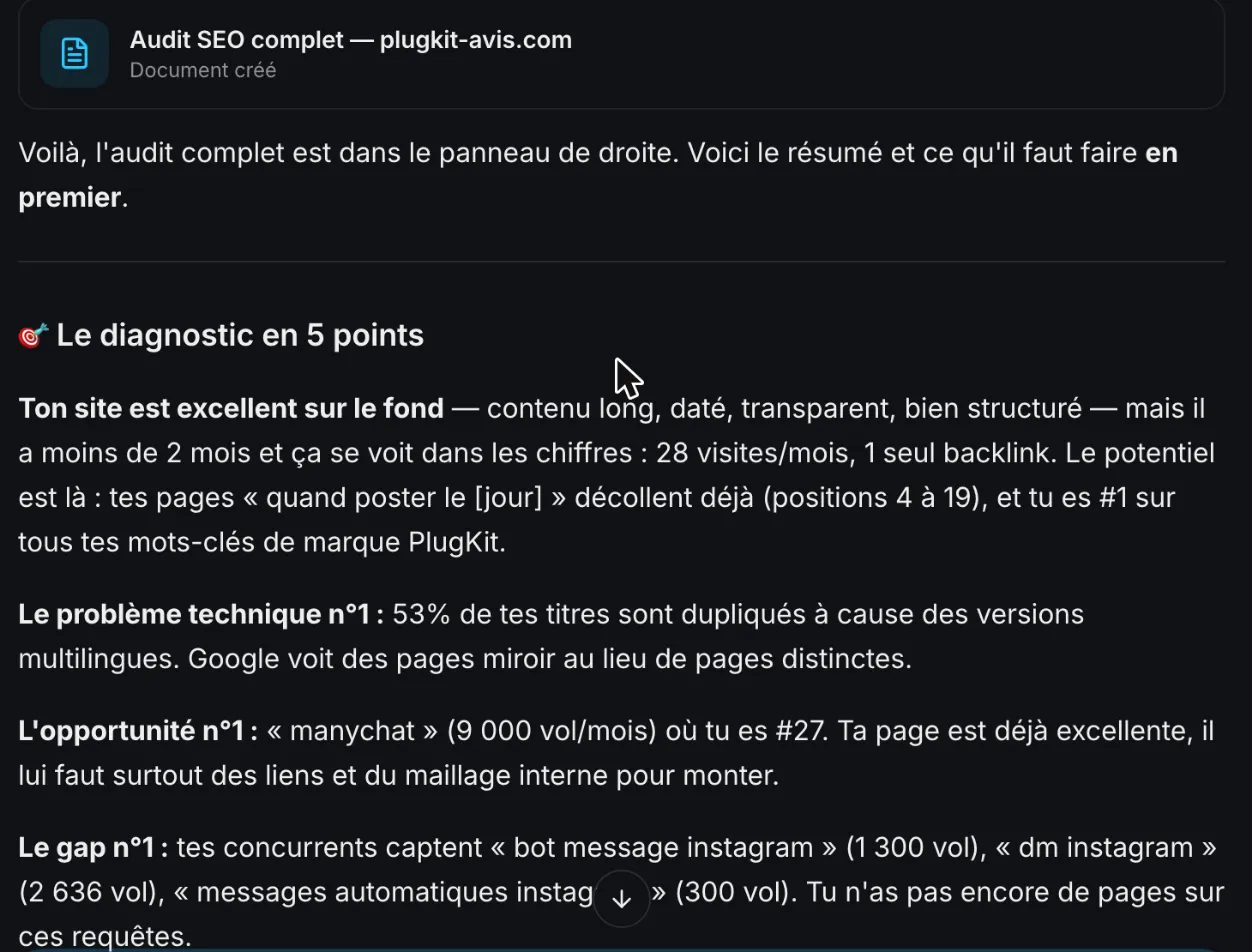
Later, in its link campaign, SemChat confirmed the count but couldn’t name the site: “le nom exact du domaine référent n’est pas renvoyé par mes données” (the exact name of the referring domain isn’t returned by my data).
So I looked it up myself with DataForSEO Backlinks the same day: hub.rankvance.com, a link agency page titled “#1 Backlink Agency…”, with 2,341 outbound links and a spam score of 20 (DataForSEO’s own index). A page that links to thousands of sites doesn’t really vouch for anyone. One such link is worth watching. Disavowing it would be pointless for now: neither of Google’s two conditions is met.
SemChat’s link campaign skill, tested: a sound plan, and what it missed
I asked SemChat’s Link campaign skill, in French, to plan three months of links for one page of the site, listing the existing links first, with “Pas de lien acheté : seulement des liens que je peux obtenir moi-même” (no bought links: only links I can get myself).
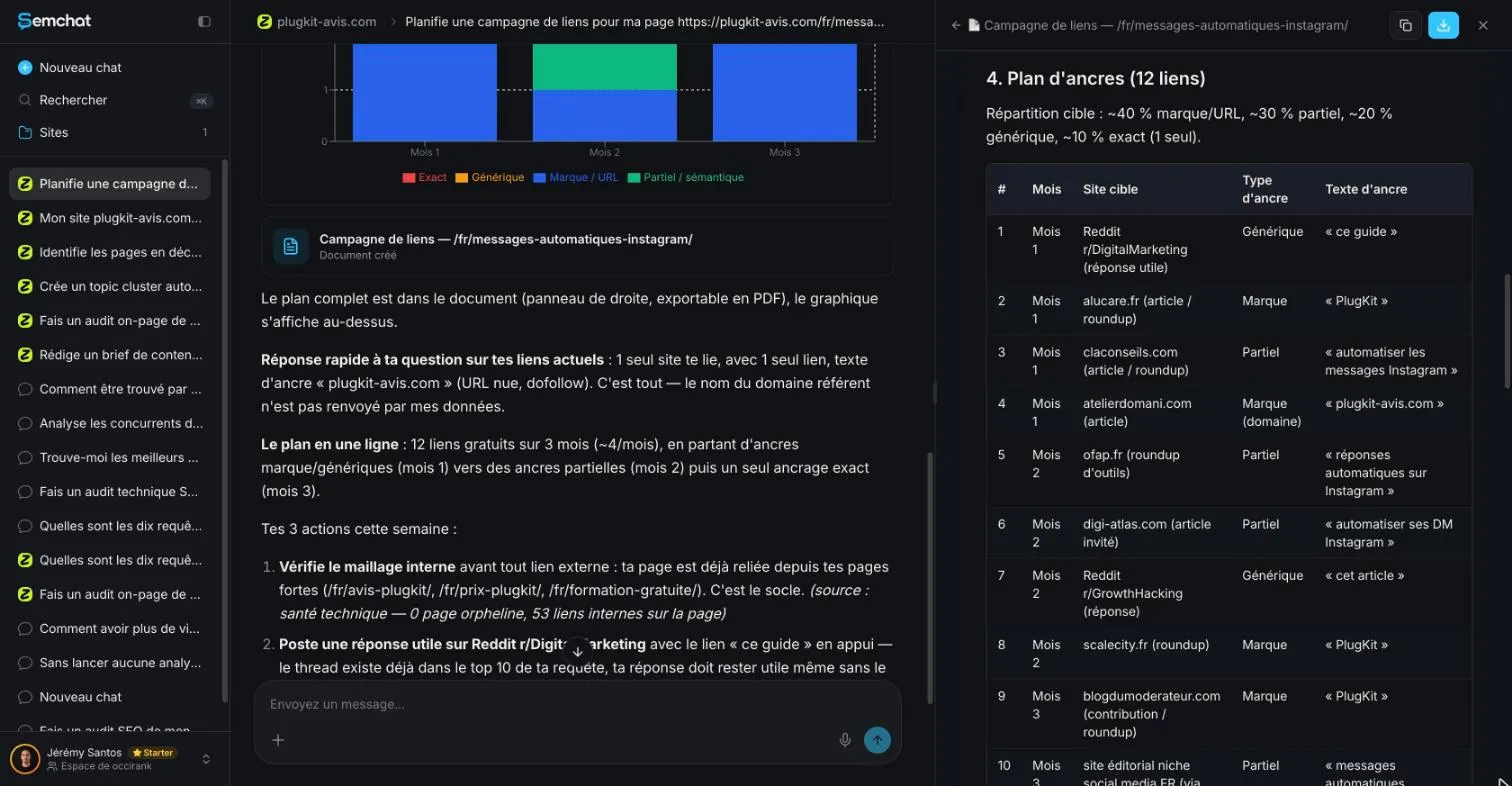
What it got right: an accurate count (1 link, 1 domain, anchor “plugkit-avis.com”), and a healthy plan. Twelve free links over three months, mostly brand or address anchors, a single exact-match anchor in month three, criteria to rule out bad sites, a calendar and check-ins, all saved in a document.
What it missed:
- it called the profile “Profil propre, aucune sur-optimisation à corriger” (clean profile, no over-optimisation to fix), while the only link came from that link agency page;
- it said the page was already linked from three strong pages of the site; that was true for one of them, based on the HTML of the 51 French pages in the sitemap;
- it said the page had no ranking in the top 50. That’s false: Search Console showed an average position of 37 for “messages automatiques instagram,” from 1 October to 28, 2026, on 2 impressions.
Two of its suggested link texts were generic (“this guide,” “this article”). For links on other sites, that’s acceptable. SemChat’s separate Link audit skill, tested on 30 October 2026, made the same mistake: a right count, but a link called risk-free without knowing its source; see our toxic backlink checker page. The full test is in our SemChat review.
My takeaway for any new site: earn a handful of real links from partners, directories your customers use and sites in your field, then check each month in Search Console who links to you. Open every page that cites you, and verify every claim a tool makes. Good backlinks come slowly, and that’s the point.
Frequently asked questions
How much does a backlink cost?
A link you earn costs nothing but your time. A link you pay for to rank higher is link spam under Google's rules, which list “Buying or selling links for ranking purposes” as the first example (spam policies, read 30 October 2026). Paying for an ad or a sponsored post is allowed if the link is marked rel="sponsored" or rel="nofollow". We don't publish link prices: we haven't read a source we trust for them.
How can you see the backlinks to your site for free?
Start with the Links report in Google Search Console: it's free for your own site and shows the top sites linking to you, grouped by root domain. Ahrefs also has a free account for sites you verify, with 1,000 backlinks and keywords visible at a time in Site Explorer (Ahrefs fact sheet, 29 October 2026).
Do backlinks still matter in 2026?
Yes, according to Google. Its ranking systems guide, read 30 October 2026, says PageRank, which uses links, “continues to be part of our core ranking systems.” Google also writes that “there's much more to Google Search than just links”: a backlink helps a useful page, it doesn't replace one.
What is a backlink profile?
It's the full picture of the links pointing to your site: how many there are, how many different sites they come from (referring domains), which link text they use, and which sites they come from. Google Search Console shows a free sample of it in its Links report.
Let your AI do the chores of getting found online.
10% off your subscription, for life with my link, if you subscribe within 2 weeks of signing up. No code. All about the SemChat promo code
Affiliate link: it costs you nothing extra.
Verified sources
- Google Search Central: Spam policies for Google web search (link spam) (30/10/2026)
- Google Search Central: Qualify your outbound links to Google (30/10/2026)
- Search Console Help: Links report (30/10/2026)
- Search Console Help: Disavow links to your site (30/10/2026)
- Google Search Central: A guide to Google Search ranking systems (PageRank) (30/10/2026)
- Google Search Central: SEO Starter Guide (links, promote your website) (30/10/2026)
- Google Search Central: In-depth guide to how Google Search works (30/10/2026)
- Google Search Central: AI features and your website (30/10/2026)
- SemChat pricing (Free plan, every feature in every plan) (29/10/2026)