AI search optimization: simple steps to show up in AI answers
AI search optimization means making your site one of the sources that ChatGPT search, Perplexity and Google's AI Overviews pick up and cite. Google's own documentation is blunt: there are no special optimizations required, and the same SEO basics apply. Here are the simple steps for a small site, in order, and what nobody can promise you.
 By Jérémy Santos Updated on October 30, 2026 Tested on his own SemChat account: first audit on October 29, 2026.
This page is part of the guide: GEO vs SEO
You keep hearing that AI is changing search, and you want to know what to actually do on your site. This page gives you the steps, based on what Google and OpenAI say on their own pages, read on October 30, 2026. For the bigger picture, see GEO vs SEO. I test SemChat on my own site; its links are affiliate links, which don’t change what I say about it.
AI search optimization: what it means
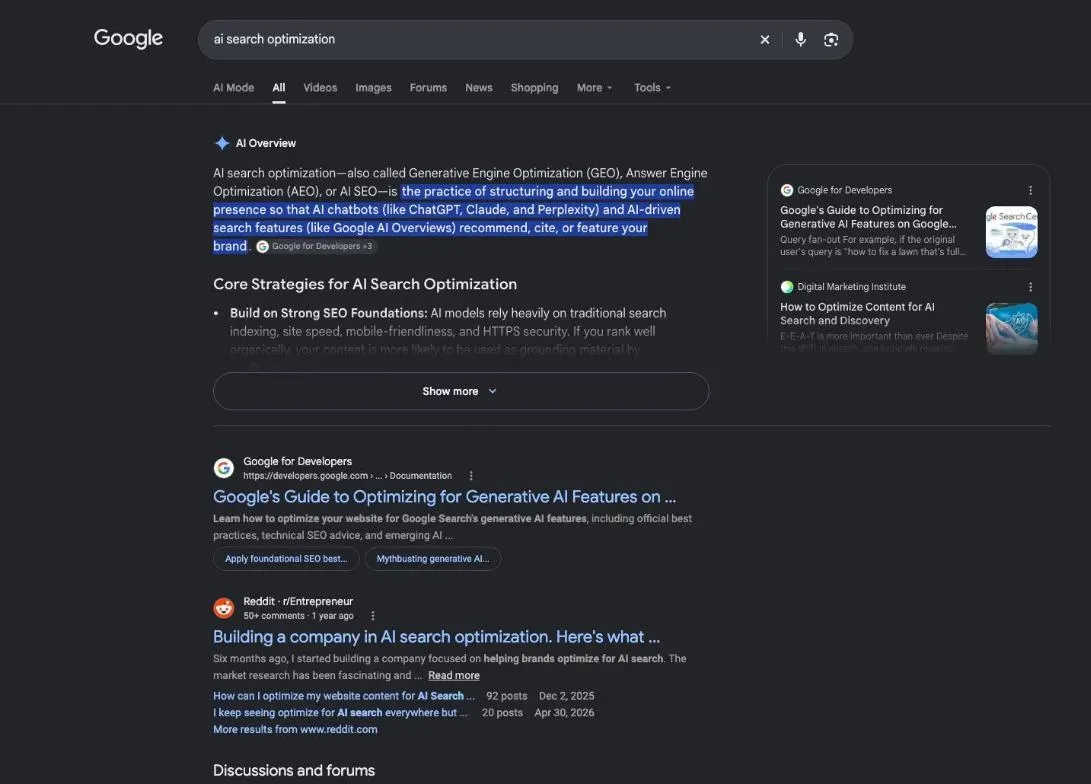
The phrase has two meanings. This page is about the second one.
SEO for AI search: the site AI engines quote
Someone asks ChatGPT search or Perplexity a question, or reads the AI Overview at the top of Google. Under the answer sit a few links. AI search optimization is the work of making your page one of them. The research name for it is generative engine optimization.
AI search SEO or AI for SEO: two different things
The first meaning is using AI to do your SEO: keyword ideas, outlines, audits. That has its own pages here: ChatGPT for SEO and the SEO agent, a tool that chains tasks on its own.
How AI search differs from classic SEO
- 1 Your question asked in plain words.
- 2 Several searches one per subtopic of the question.
- 3 Pages fetched read and sorted by the engine.
- 4 An answer with links the pages it kept are cited.
Rankings versus how AI describes you
Classic search hands you a list; you click. An AI engine reads several pages for you, writes one answer, and cites a few sources. So on top of your rank, you now want to be one of the few pages it read and trusted.
Links and brand mentions as trust signals
I found no official page on how much mentions weigh for AI engines. The guide on walkersands.com lists backlinks and brand mentions together as trust signals. Take it as advice, not a rule.
Conversational questions instead of keywords
Google says AI Overviews and AI Mode may use a “query fan-out” technique: “issuing multiple related searches across subtopics and data sources.” So a page that answers one narrow question very well can be used, even if it doesn’t rank for the broad one. One clear page per question beats a catch-all page.
Pages readable without JavaScript
Google asks you to make sure “important content is available in textual form.” Text that only appears after JavaScript runs may be missed by some crawlers.
Simple steps to optimize your website for AI search
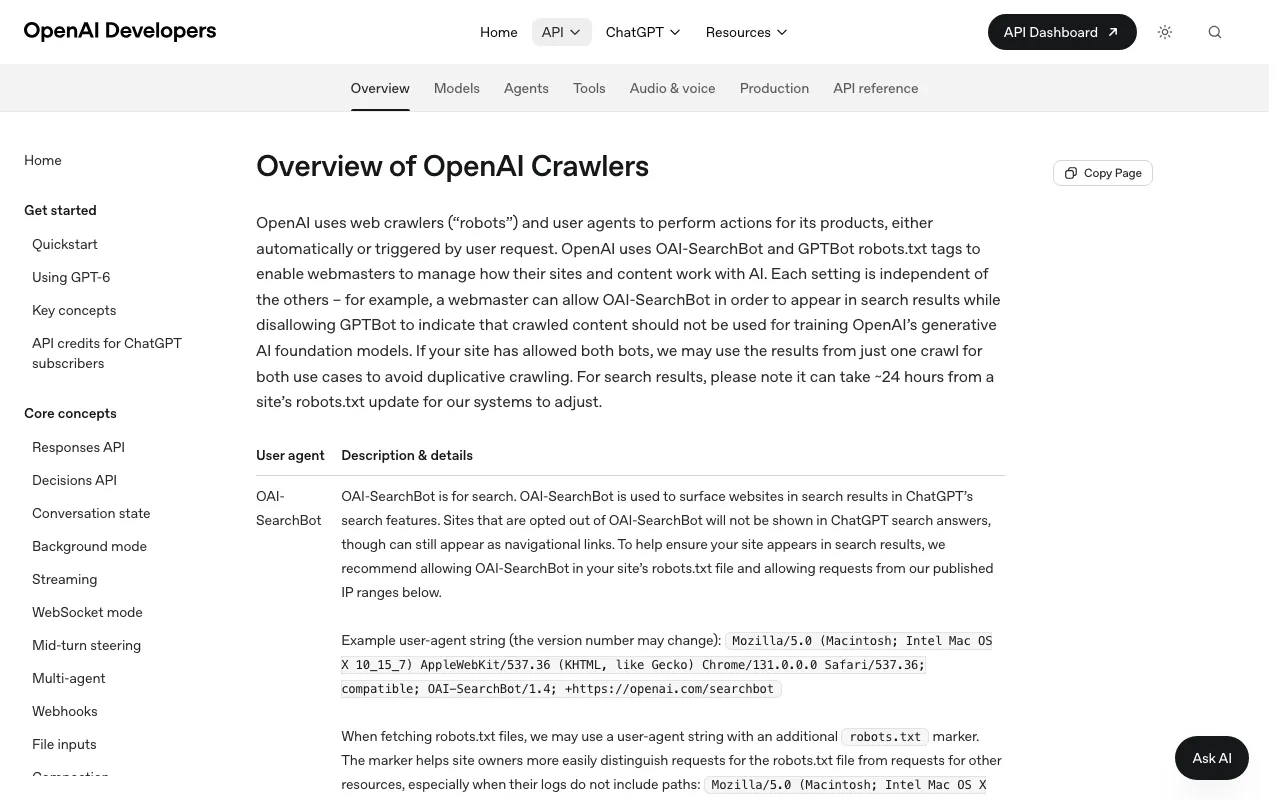
OpenAI’s page on its crawlers, to read before blocking any of them. Screenshot of developers.openai.com, taken October 30, 2026.
Start with access. OpenAI’s crawler page, read October 30, 2026, separates three robots:
- “OAI-SearchBot is used to surface websites in search results in ChatGPT’s search features.” And: “Sites that are opted out of OAI-SearchBot will not be shown in ChatGPT search answers, though can still appear as navigational links.”
- “GPTBot is used to make our generative AI foundation models more useful and safe.” Blocking it opts you out of training, not out of search.
- “ChatGPT-User is not used to determine whether content may appear in Search.”
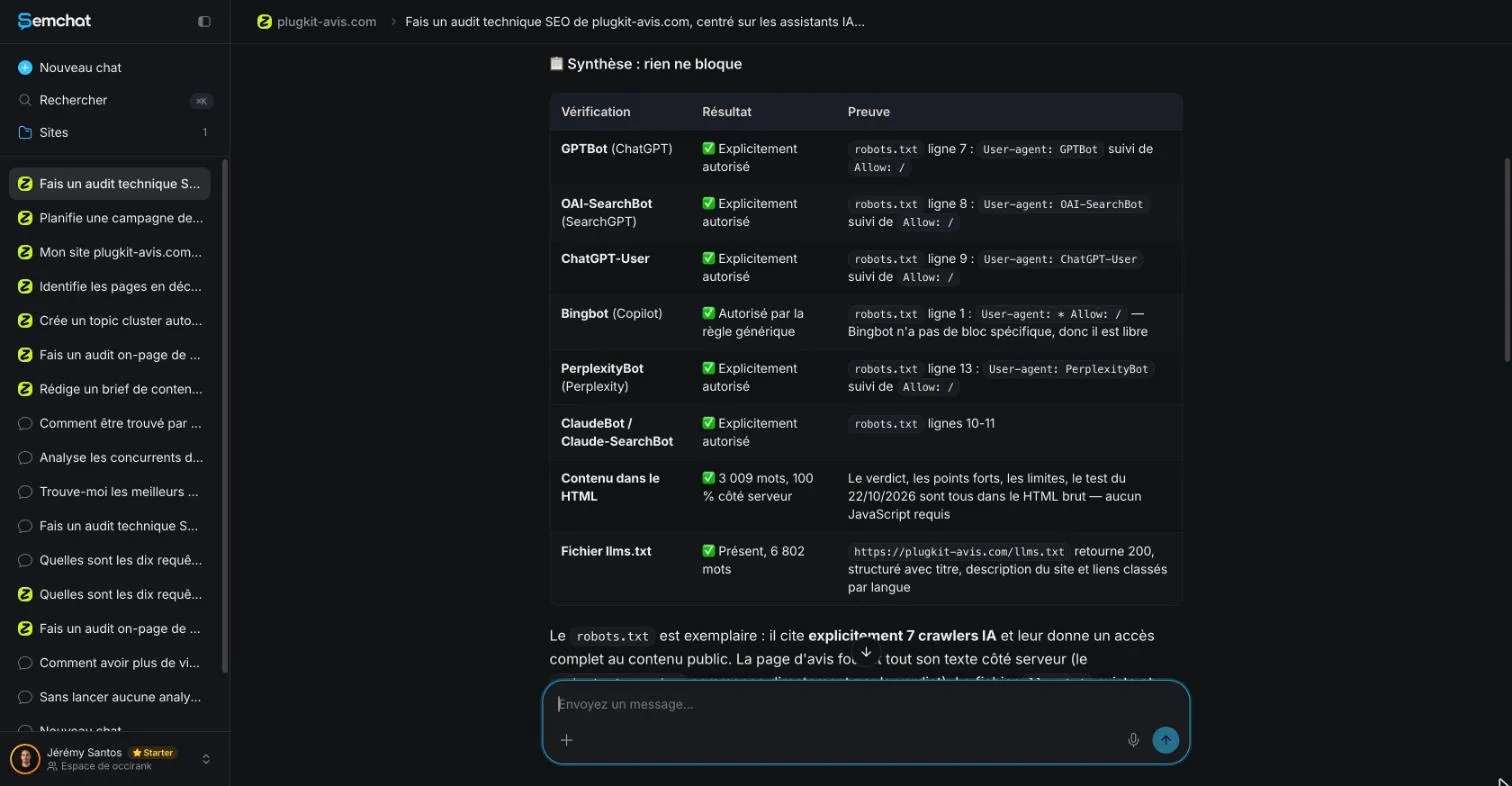
Open yoursite.com/robots.txt in your browser and check that OAI-SearchBot isn’t blocked. More on ChatGPT in how to rank in ChatGPT.
Step 1: rank well on Google first
Google’s rule: “To be eligible to be shown as a supporting link in AI Overviews or AI Mode, a page must be indexed and eligible to be shown in Google Search with a snippet.” Type site:yoursite.com into Google to see what it knows.
Step 2: answer questions directly
Open each section with the answer in one or two sentences, then the details. An engine looking for a short answer finds it faster at the top.
Step 3: publish clear, sourced content
Google: “People-first content means content that’s created primarily for people, and not to manipulate search engine rankings.” Give numbers with their source and date, and say who wrote the page.
Step 4: add structured data
Structured data is hidden labels in your code: article, author, questions and answers. Google’s only ask for AI features: “Making sure your structured data matches the visible text on the page.” It describes your page; it doesn’t guarantee a citation.
Step 5: keep your site fast
None of the official pages I read makes speed a criterion for AI answers. Walkersands.com recommends it anyway; a fast page is good for your visitors either way.
Step 6: get mentioned in trusted publications
Your Google Business Profile, your trade directories, local press, customer reviews. Pages that other sites talk about are easier to trust.
What Google’s own guide says
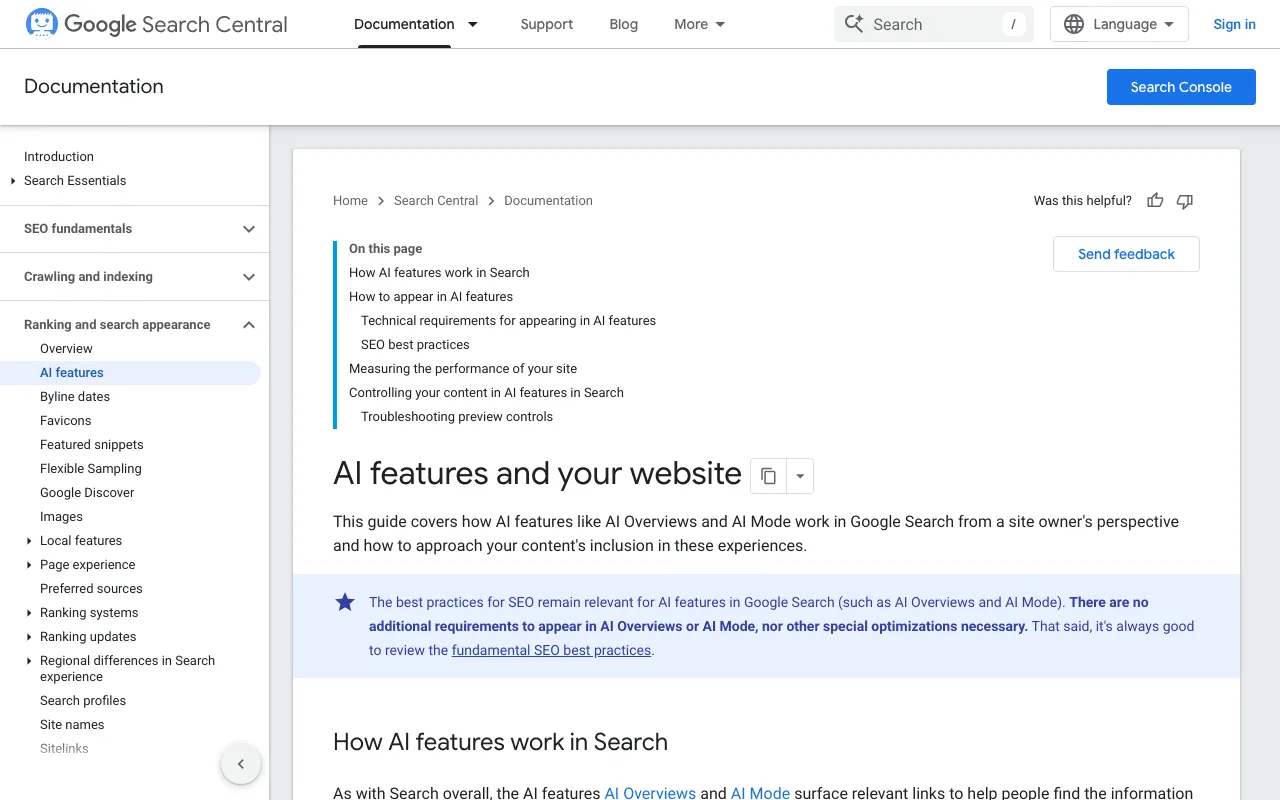
Google’s documentation: the same foundational SEO practices apply to AI features. Screenshot of developers.google.com, taken October 30, 2026.
Google’s page, read October 30, 2026: “There are no additional requirements to appear in AI Overviews or AI Mode, nor other special optimizations necessary.” And: “You can apply the same foundational SEO best practices for AI features as you do for Google Search overall.”
Then the line that settles the llms.txt debate for Google: “You don’t need to create new machine readable files, AI text files, or markup to appear in these features.”
Google’s AI Overviews in detail
Google also notes that AI Overviews show only when its systems find them “additive to classic Search, and as such, often don’t trigger.” The full picture is on the AI Overviews SEO page.
The limits: what nobody can guarantee
Measuring AI visibility is still shaky
Google counts traffic from AI Overviews and AI Mode in Search Console’s Performance report, “Web” search type, mixed with the rest. For ChatGPT, the simple test is the one SemChat itself suggests: ask the question and look at the cited sources.
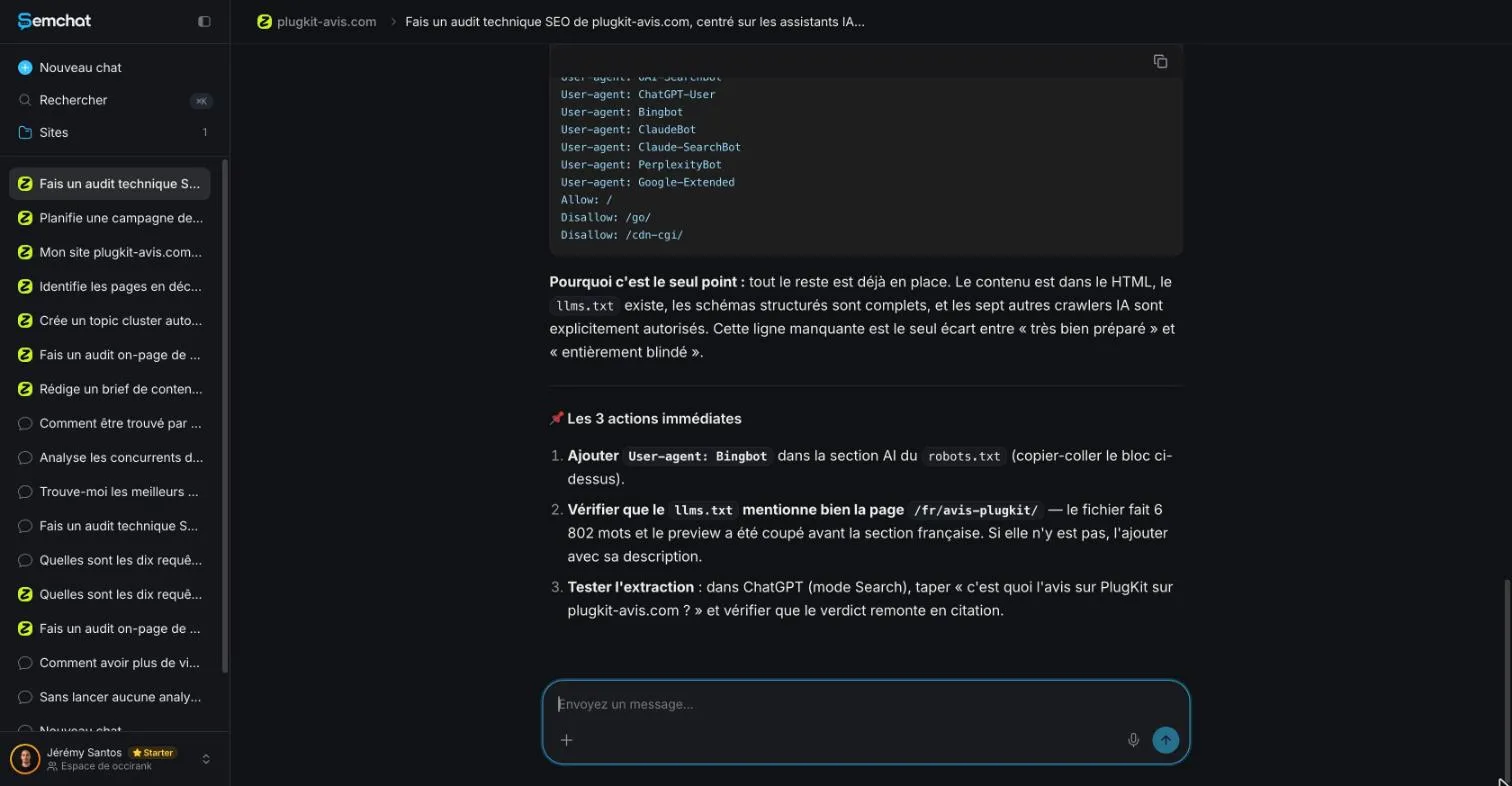
SemChat doesn’t track AI visibility. Its GEO is announced as planned, with no date (email from Adrian Delmarre, October 29, 2026). Missing data: when that tracking ships (planned source: SemChat).
AI search optimization tools and agencies: what to ask before paying
Paid trackers exist. Semrush’s AI Visibility toolkit, Base tier, costs €94.94 a month per domain, billed yearly, and tracks mentions in ChatGPT, Google’s AI, Gemini and Perplexity (fr.semrush.com, read October 29, 2026). Semrush also offers a free AI Visibility Checker. Before paying anyone, ask: which engines, how often, and how they count a “mention.”
Is AI search optimization replacing SEO?
No. Google says the same foundations apply, and an AI engine can only cite a page it can find.
The term GEO and where it comes from
“GEO: Generative Engine Optimization,” by Pranjal Aggarwal and five coauthors, was posted on arXiv on November 16, 2023 (version of June 28, 2024). On their own benchmark, their methods raised visibility in AI answers “by up to 40%,” and the effect varied by domain.
So AI search optimization is your SEO, done properly, with three extra habits: let the crawlers in, put the answer first, and get talked about elsewhere. Check your robots.txt this week; it’s the fastest step in AI search optimization.
Frequently asked questions
What is AI search optimization called?
It goes by several names: GEO (generative engine optimization), AEO (answer engine optimization), or simply SEO for AI search. The goal is the same: get your pages used and cited in answers written by AI. The term GEO comes from a research paper first posted on arXiv on November 16, 2023.
How does generative AI help search engine optimization?
That is the other meaning of the phrase: using AI to do your SEO faster, like finding keywords, drafting outlines or spotting technical problems. It saves time, but check its output. OpenAI's own help says ChatGPT's search results and citations "can be incomplete, outdated, or incorrect" (read October 30, 2026).
What will AI SEO look like in 2026?
I won't make a prediction without a dated source. What Google says today: "There are no additional requirements to appear in AI Overviews or AI Mode, nor other special optimizations necessary" and "You can apply the same foundational SEO best practices for AI features as you do for Google Search overall" (read October 30, 2026).
Do I need an llms.txt file to show up in AI search?
Not for Google. Its documentation says: "You don't need to create new machine readable files, AI text files, or markup to appear in these features" (read October 30, 2026). I haven't read any official page from another AI search engine that requires one.
Can SemChat track my visibility in ChatGPT?
No, not today. SemChat's GEO is announced as planned, with no date (email from Adrian Delmarre of Haloscan, October 29, 2026). What SemChat does, and what I tested on October 29, 2026: check whether AI crawlers can read your site (robots.txt, llms.txt, text in the HTML, markup).
Let your AI do the chores of getting found online.
10% off your subscription, for life with my link, if you subscribe within 2 weeks of signing up. No code. All about the SemChat promo code
Affiliate link: it costs you nothing extra.
Verified sources
- Google Search Central: AI features and your website (October 30, 2026)
- Google Search Central: creating helpful, reliable, people-first content (October 30, 2026)
- OpenAI: Overview of OpenAI Crawlers (October 30, 2026)
- OpenAI Help: ChatGPT search (October 30, 2026)
- GEO: Generative Engine Optimization, Aggarwal et al., arXiv (October 30, 2026)
- Semrush AI Visibility toolkit pricing (French page, in euros) (October 29, 2026)
- SemChat pricing (Free plan at €0) (October 29, 2026)