SEO for small business: the steps, in order, without jargon
SEO for small business means helping Google find your site, understand it and show it to people who search for what you sell. You can't buy it from Google; you earn it, step by step: make sure Google knows your site, choose the searches you can win, write one page per customer need, earn trust with reviews and links, and measure. Here are the steps in order.
 By Jérémy Santos Updated on October 30, 2026 Tested on his own SemChat account: first audit on October 29, 2026.
- 1 Be found Google knows your site and indexes it.
- 2 Aim You choose your customers' searches.
- 3 Answer One clear page for each need.
- 4 Earn trust Reviews and links from elsewhere.
- 5 Measure You track progress every month.
You run a shop, a trade or a small service business, and you want customers to find you on Google. SEO for small business isn’t reserved for technicians: it’s a series of steps in a set order. This guide gives them, then points to a detailed page for each question.
The SemChat links on this page are affiliate links: if you subscribe through them, I earn a commission, at no extra cost to you and with no effect on what I write.
SEO for small businesses: what it means for your shop
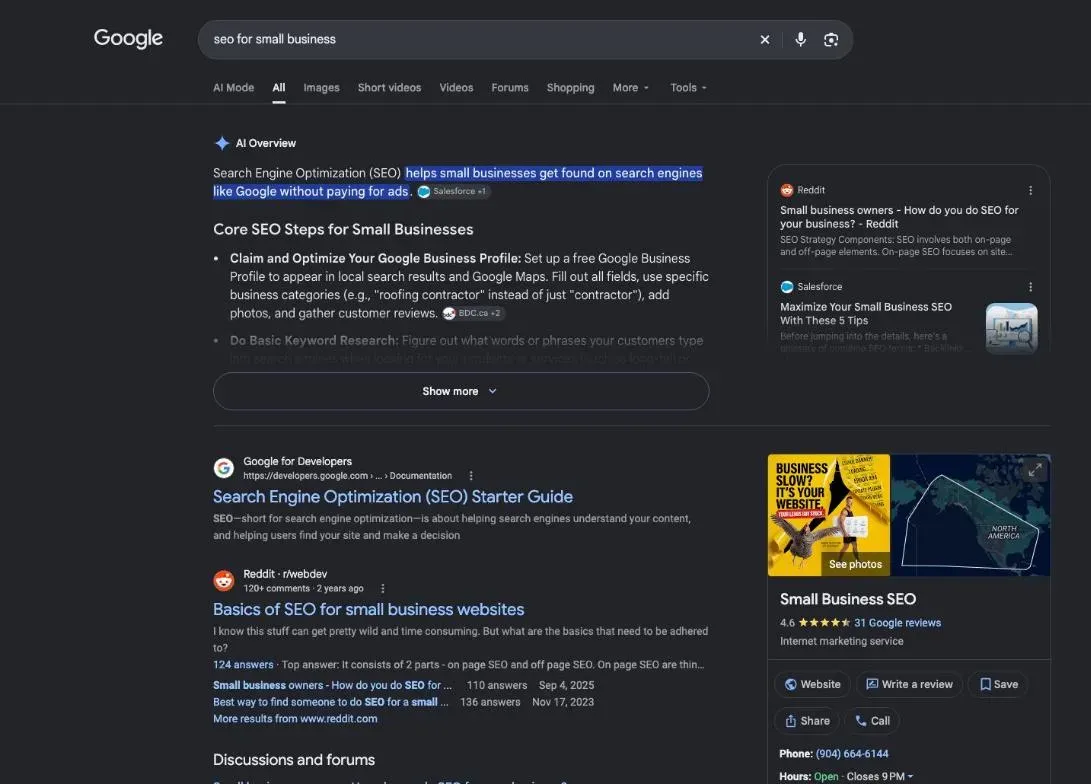
SEO, search engine optimization, is the work that helps Google understand your site. Google’s definition: it “is about helping search engines understand your content, and helping users find your site” (SEO Starter Guide, read October 30, 2026). For a small business, it means showing up when someone nearby searches for what you sell.
Small business SEO or paid ads: the difference
Ads show up right away, labeled “Sponsored”, and you pay per click. Organic results take longer and cost nothing at Google: “Google doesn’t accept payment to crawl a site more frequently, or rank it higher” (How Search works, read October 30, 2026). Ads stop with the budget; pages that rank keep working.
Why being found locally matters
Many small businesses serve an area. For those searches, Google often shows a map with Business Profiles before the list of sites. Google says: “Local results are mainly based on relevance, distance, and popularity”, and “There’s no way to request or pay for a better local ranking on Google” (Business Profile help, read October 30, 2026).
Is SEO worth it for a small business?
It depends on how many people search for what you sell, and what one customer is worth to you. A measured return for small businesses: missing data (planned source: a dated study of SEO results for small businesses). Start with the free steps and judge with your own numbers.
Small business SEO, step by step
Step 1: make sure Google knows your site
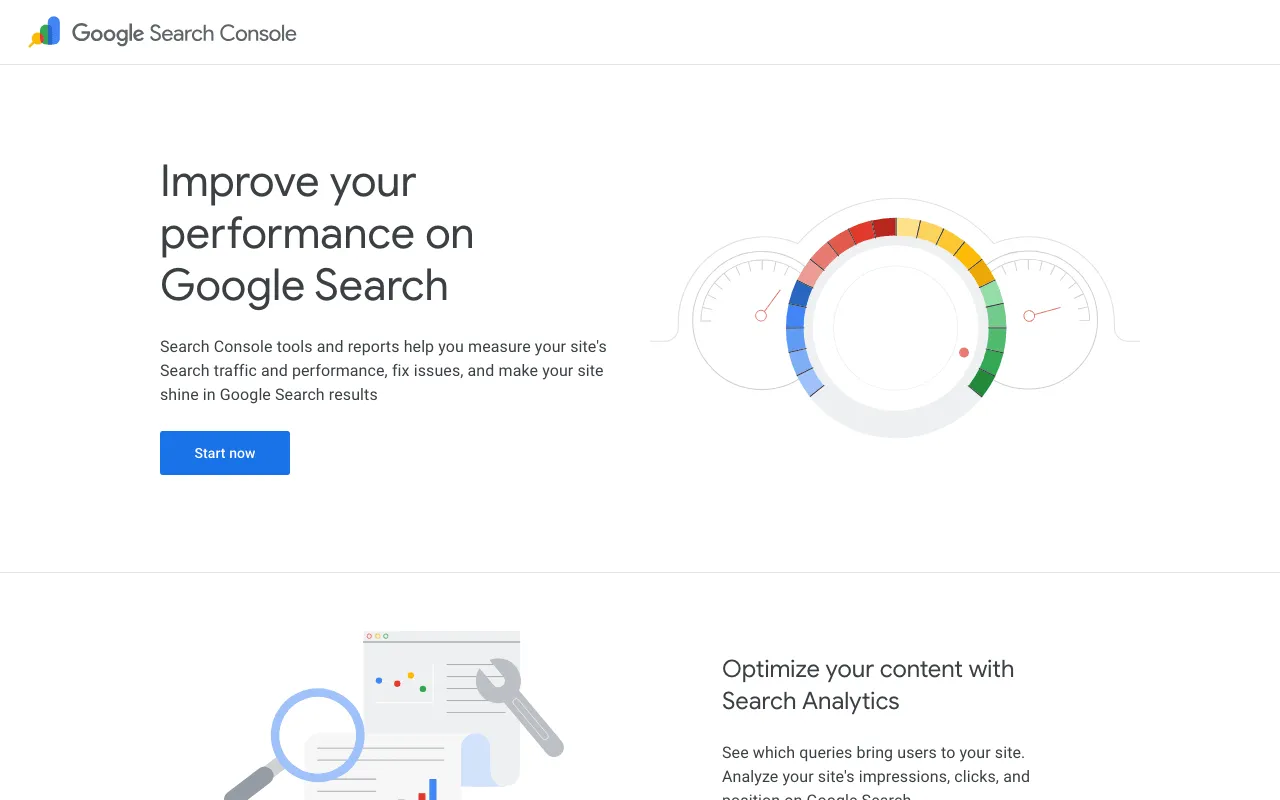
Google’s Search Console overview page. Screenshot of search.google.com/search-console/about, taken October 30, 2026.
Verify your site in Search Console, free. Then type site: followed by your domain in Google; Google notes this search “doesn’t necessarily return all the URLs that are indexed” (How to get your website on Google, read October 30, 2026), so check the Pages report too.
Step 2: choose the searches you can win
Write down the questions customers ask you on the phone. They’re close to what they type into Google. Prefer precise, local searches: “water heater repair in Tulsa” over “plumber”.
Step 3: one page for each customer need
One page per service, with a clear title, an answer in the first lines, your prices or service area, and a way to reach you.
Step 4: earn trust, reviews and links

Earning trust one customer at a time: reviews and links. Illustration by Zéro Corvée.
Ask real customers for reviews on your Business Profile, and partners, suppliers or your trade association for links. Never pay for links: Google says that could be considered a violation of its spam policies.
Step 5: measure what changes
Each month, note clicks and impressions in Search Console, and calls in your Business Profile. Compare month to month, and wait a few weeks after a change before judging it.
Do it yourself, use a tool, or hire an SEO company
Choosing an SEO company: what to ask first
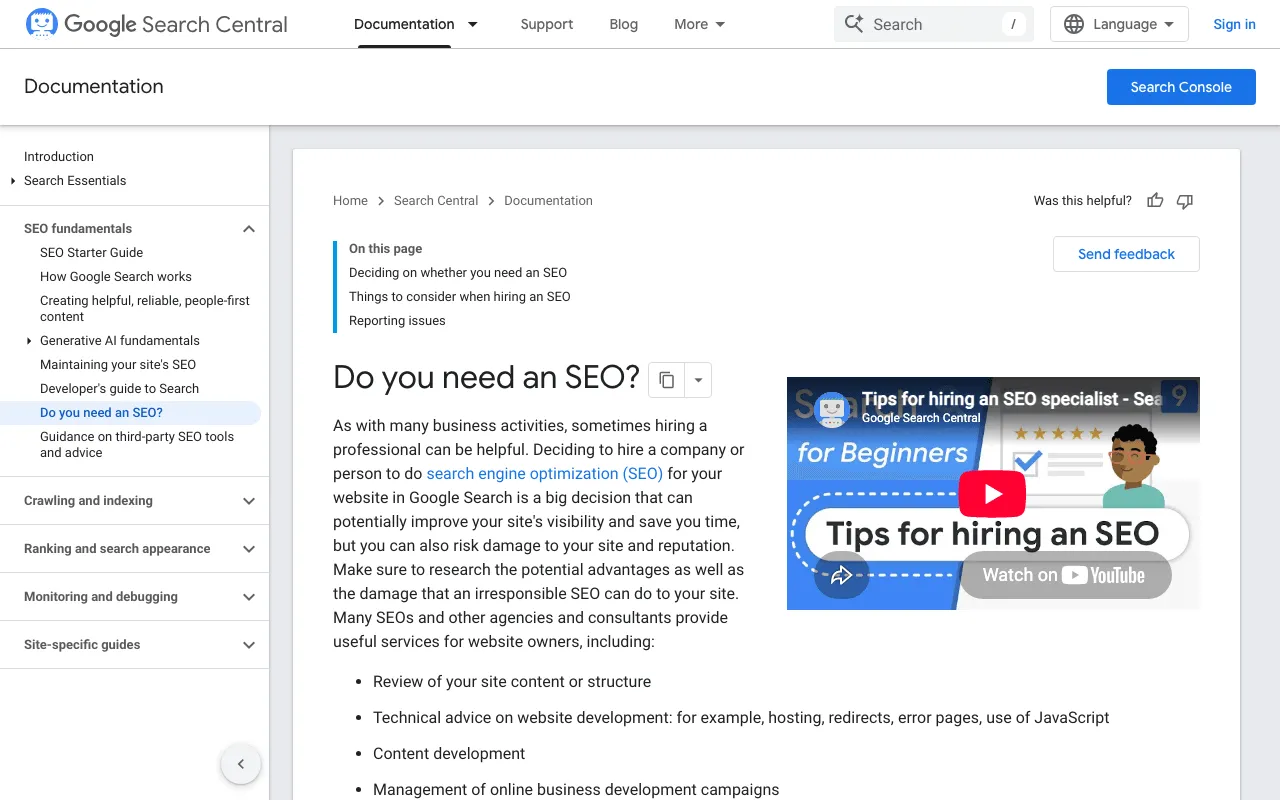
Google’s advice page on hiring an SEO. Screenshot of developers.google.com/search/docs/fundamentals/do-i-need-seo, taken October 30, 2026.
Google’s warning: “No one can guarantee a #1 ranking on Google. Beware of SEOs that claim to guarantee rankings” (read October 30, 2026). Ask what each line of the quote covers, how many hours, and what results to expect in what time. In a 2024 Ahrefs survey of 439 providers, the most common monthly retainer was $501 to $1,000 (updated August 15, 2024).
Affordable SEO tools you can use yourself
Search Console is free, and PageSpeed Insights only needs your page’s address. Paid tools add competitor data or an assistant that writes the action plan. Google notes that third-party tools don’t have access to its internal ranking data.
Check your site in one sentence
On October 29, 2026, I tested SemChat, an SEO assistant you talk to in plain language, on my site plugkit-avis.com. The audit ran in French, on a French site that also has English versions. One sentence asking for a full audit and a priority plan; about 3 minutes later, I had a diagnosis and three actions for the week.
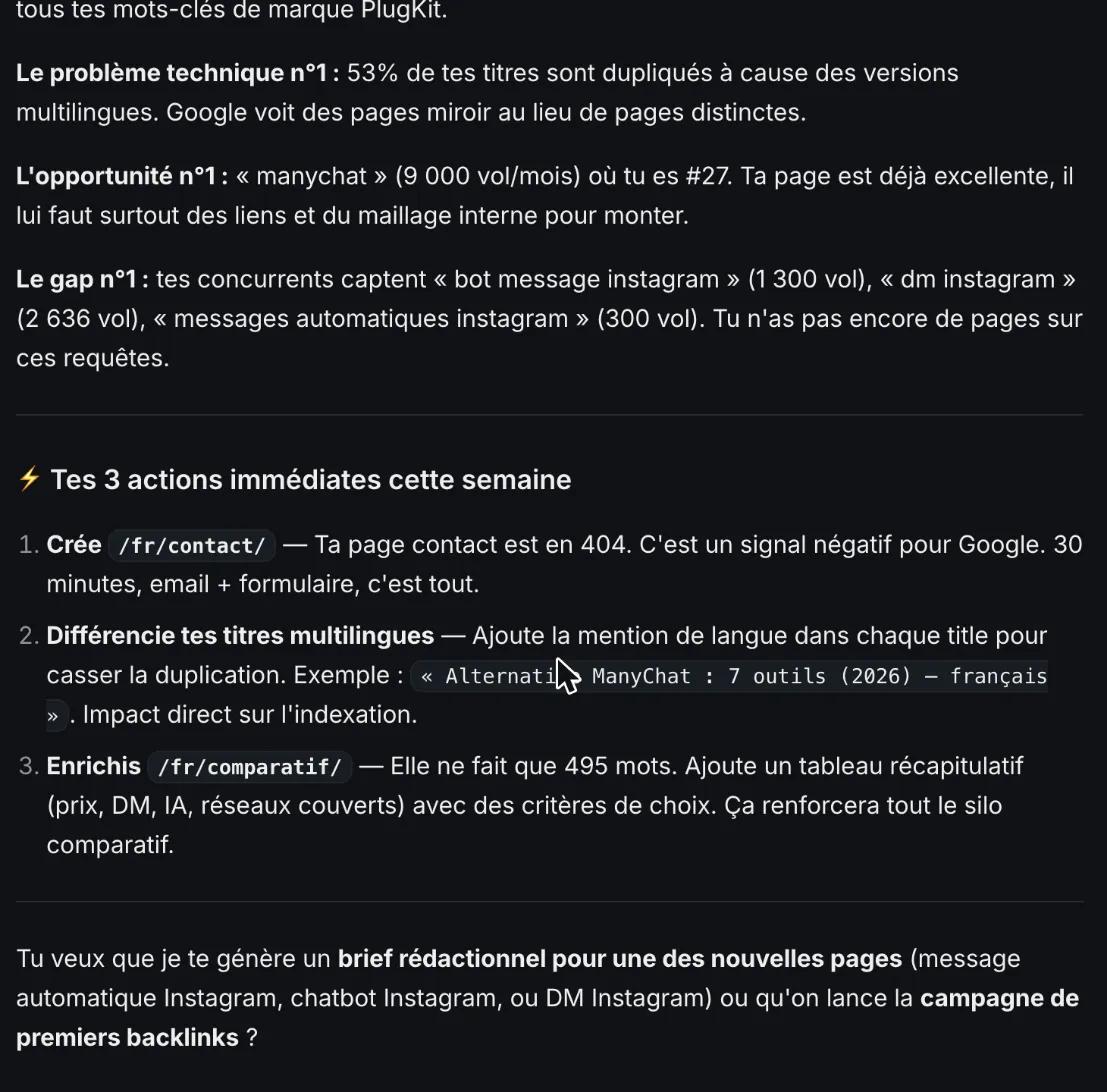
The priority action plan SemChat returned after a single sentence, October 29, 2026 (French interface). Screenshot of the SemChat app, Jérémy’s account, Free plan.
What a real audit found on a small French site
- A contact page in 404 error. Checked by hand: true.
- Duplicate titles between the US English and UK English versions of a page. Checked: true, with a nuance: they’re declared language variants of one page, not copies.
The catch: that single audit used up the Free plan’s whole monthly quota. My full test, limits included, is in the SemChat review.
Small business SEO mistakes to avoid
Most of these cost nothing to avoid, and a lot to fix later:
- Buying links or reviews. Google warns that paying for links could be considered a violation of its spam policies, and its rules on reviews forbid paid or incentivized reviews. Ask real customers, with nothing in return.
- Trusting a guarantee. No one can guarantee a #1 ranking on Google. A provider who promises one is a warning sign.
- Giving away full access. Google advises giving providers read-only access to Search Console when possible, and reminds you that you’re responsible for what contractors do on your site.
- Two pages for one search. A “services” page and a “what we do” page that say the same thing compete with each other. Merge them.
- Out-of-date information. Wrong hours, old prices, a service you dropped: customers notice before Google does.
- Judging too soon. Google suggests waiting a few weeks after a change before deciding whether it worked.
A simple monthly SEO routine for a small business
One hour a month keeps things moving:
- Search Console, 15 minutes. Note clicks, impressions and indexed pages. Look at new errors.
- Business Profile, 15 minutes. Check hours and photos, answer new reviews, post an update if you have news.
- One page, 20 minutes. Improve the page with the most impressions and the fewest clicks: a clearer title, a better first paragraph.
- One request, 10 minutes. Ask a partner, a supplier or a customer for a link or a review.
Write your numbers in a simple table. After three months you’ll see what moved, and you’ll know where to spend the next hour.
Storefront or service area: two kinds of small business SEO
A storefront (a bakery, a hair salon, a shop) gets customers who come to the address. The Business Profile, the map and the reviews do much of the work; your site backs them up with hours, products and prices.
A service area business (a plumber, a cleaner, a mobile mechanic) goes to customers. With no shop to visit, your pages about each service and the areas you cover have to do more of the work, next to the Business Profile. In both cases, the steps are the same: be found, aim, answer, earn trust, measure. What Google looks at to rank you near your customers is on the page local SEO for small business.
How to get my website on Google for free: every no-cost lever
Search Console, a sitemap, a Business Profile, useful pages, earned links: all free, all costing time. The full list is on the page how to get my website on Google for free.
How to get my website on Google: Search Console, sitemap, indexing
Verify your site, send your sitemap, request indexing for new pages, check the index. The steps are on the page how to get my website on Google.
SEO meaning: the simple answer, no jargon
Three letters for search engine optimization: everything that helps Google understand your site. The plain-English version is on the page SEO meaning.
How to get to the top of Google search: the honest method
No one can guarantee the top spot. What works: pick a search you can win, build the best page for it, earn links. The method is on the page how to get to the top of Google search.
How to improve SEO: diagnose first, then fix by priority
Your site is live but Google sends few visitors? Diagnose, fix what blocks Google, improve pages, measure. The order is on the page how to improve SEO.
SEO cost: what you pay with an agency, a freelancer or on your own
€0 at Google; then you pay in time, a tool, or a provider. Dated figures, and gaps where no source exists, are on the page SEO cost.
Search engine optimization: how it works, lever by lever
A search engine crawls, indexes, then ranks; you work on technical, content and links. The details are on the page search engine optimization.
SEO for small business comes down to five steps: be found, aim at the right searches, answer, earn trust, measure. Start with the first one this week.
Frequently asked questions
What are the fundamentals of SEO?
Three things: a site Google can read and index, pages that clearly answer what your customers search for, and mentions from elsewhere (links from other sites, reviews on your Business Profile). Everything else builds on those.
Does SEO work for a small business?
It can, especially on precise and local searches where national brands don't compete. A measured return for small businesses: missing data (planned source: a dated study of SEO results for small businesses). What Google guarantees is only that organic results cost nothing to appear in.
Is SEO dead or still evolving in 2026?
Still alive, and evolving with AI answers. Google writes that there are no additional requirements to appear in its AI Overviews or AI Mode, nor special optimizations necessary (AI features and your website, read October 30, 2026): the usual SEO basics still apply.
How long does SEO take for a small business?
Google gives no fixed delay: some changes take effect in a few hours, others in several months, and it suggests waiting a few weeks before judging (SEO Starter Guide, read October 30, 2026).
Let your AI do the chores of getting found online.
10% off your subscription, for life with my link, if you subscribe within 2 weeks of signing up. No code. All about the SemChat promo code
Affiliate link: it costs you nothing extra.
Verified sources
- Google Search Central: SEO Starter Guide (October 30, 2026)
- Google Search Central: In-depth guide to how Google Search works (October 30, 2026)
- Google Search Central: How to get your website on Google (October 30, 2026)
- Google Search Central: Do you need an SEO? (October 30, 2026)
- Google Search Central: AI features and your website (October 30, 2026)
- Google Business Profile Help: tips to improve your local ranking (October 30, 2026)
- Google Search Console overview page (October 30, 2026)
- Ahrefs: SEO pricing survey of 439 providers (updated August 15, 2024) (October 30, 2026)
- SemChat pricing (October 30, 2026)
- Google Maps user contributed content policy: prohibited and restricted content (October 30, 2026)